Sweet Violet (Viola odorata)
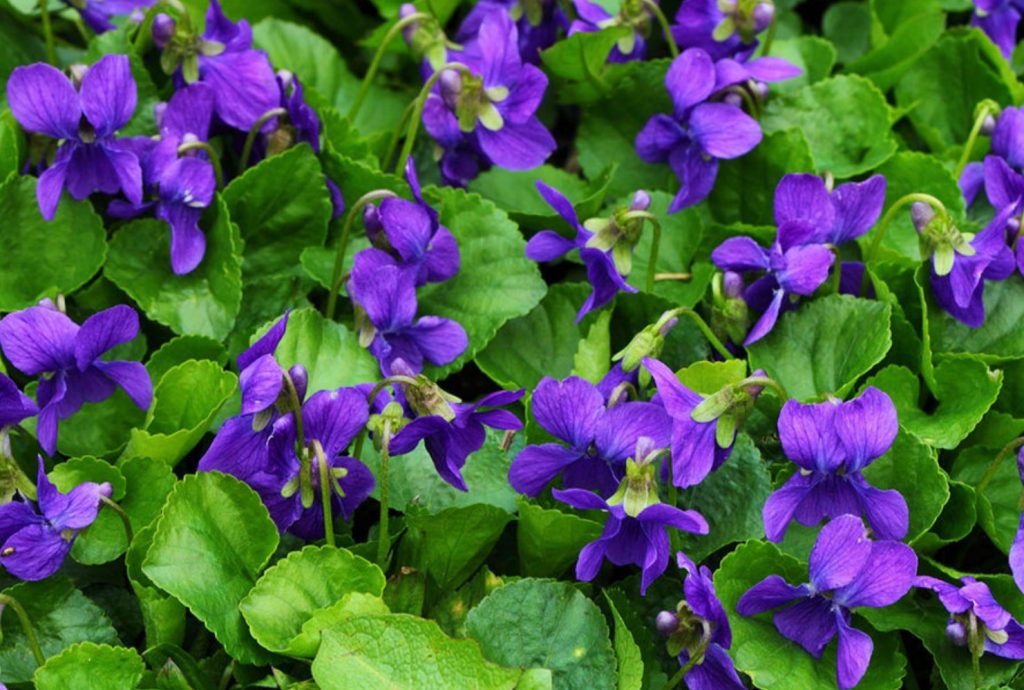
How to Identify Sweet Violet
Sweet violet (Viola odorata) is a charming perennial plant renowned for its delicate fragrance and attractive appearance. Proper identification involves examining several distinctive features:
Leaves
- The leaves are heart-shaped, with a smooth or slightly serrated margin.
- They typically grow close to the ground in a rosette formation.
- The foliage is a vibrant green, often with a glossy surface.
Flowers
- The flowers are small, approximately 1 to 2 centimeters across.
- They display a characteristic purple hue, although some varieties may have white or pale violet blossoms.
- Each flower has five petals; the lower petal often features darker markings or lines that guide pollinators.
Fragrance
- One of the most notable features is its sweet, pleasant aroma emanating from the flowers and leaves.
- The scent is often described as fresh and floral, making it easily distinguishable from similar plants.
Growth
- Sweet violet prefers shaded or semi-shaded environments with moist, well-drained soil.
- It tends to form dense patches through creeping stems and underground rhizomes.
Seasonality
- Blooming typically occurs in early spring to late autumn, depending on climate conditions.
- The plant remains evergreen in milder climates.
Uses of Sweet Violet
Culinary Applications
- The flowers and leaves of sweet violet are often used to add a delicate floral flavor to salads, desserts, and beverages.
- Candied violets serve as decorative elements for cakes and pastries, providing both aesthetic appeal and subtle sweetness.
- The petals can be infused into syrups or used to create flavored liqueurs, enhancing culinary creations with their aromatic qualities.
Ornamental Use
- Due to its attractive appearance and pleasant fragrance, sweet violet is commonly cultivated as a ground cover or decorative plant in gardens and landscapes.
- It serves as an ornamental feature in shaded garden beds, borders, or containers.
Ecological Benefits
- The plant attracts pollinators such as bees and butterflies, supporting local ecosystems.