Sunflower (Helianthus annuus)
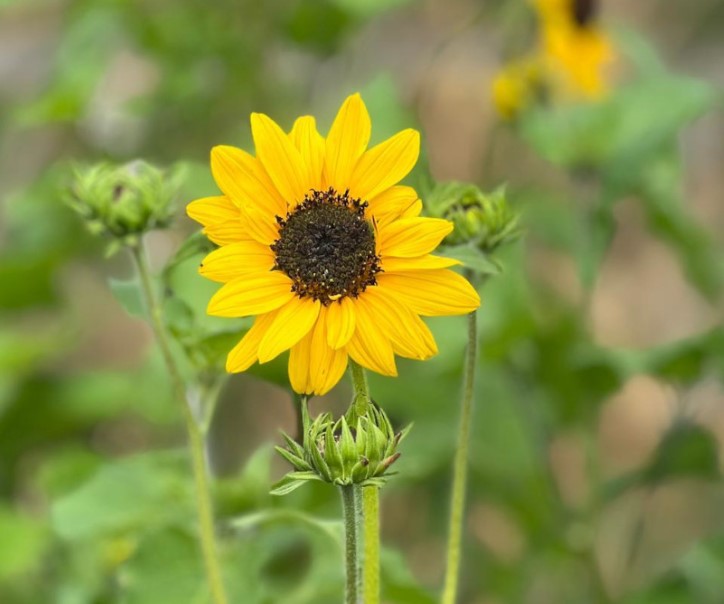
How to Identify a Sunflower
Sunflowers are easily recognizable due to their distinctive features and vibrant appearance. The following characteristics can assist in accurately identifying a sunflower:
Flower Head
- Large, round flower head with a prominent central disk.
- The disk is typically composed of numerous small florets that develop into seeds.
- Surrounding the disk are bright yellow petals, known as ray florets, which radiate outward.
Stem
- Tall and sturdy, often reaching heights of 5 to 12 feet.
- Covered with coarse, rough hairs or bristles.
- Usually thick and straight, providing support for the large flower head.
Leaves
- Broad, ovate (egg-shaped) leaves with a rough texture.
- Leaves are arranged alternately along the stem.
- They often have jagged or toothed edges.
Growth Habit
- Sunflowers typically grow in clusters or individually in open fields.
- They prefer full sunlight and well-drained soil.
Seed Production
- After flowering, the central disk matures into a seed head filled with black or striped seeds.
- Seeds are often harvested for consumption or oil production.
Uses of Sunflower
Food and Culinary Uses
- Edible Seeds: Sunflower seeds are consumed as snacks, added to salads, or incorporated into baked goods for their crunchy texture and nutritional value.
- Sunflower Butter: Ground sunflower seeds can be processed into a butter substitute suitable for those with nut allergies.
Ornamental and Aesthetic Value
- Decorative Plant: Sunflowers are popular in gardens and floral arrangements owing to their vibrant appearance and towering stature.
- Symbolism: They often symbolize positivity, loyalty, and admiration in various cultural contexts.
Environmental Benefits
- Pollinator Support: Sunflowers attract bees, butterflies, and other pollinators, contributing to biodiversity and the health of ecosystems.