Scented Geranium (Pelargonium graveolens)
How to Identify Scented Geranium
Visual Characteristics
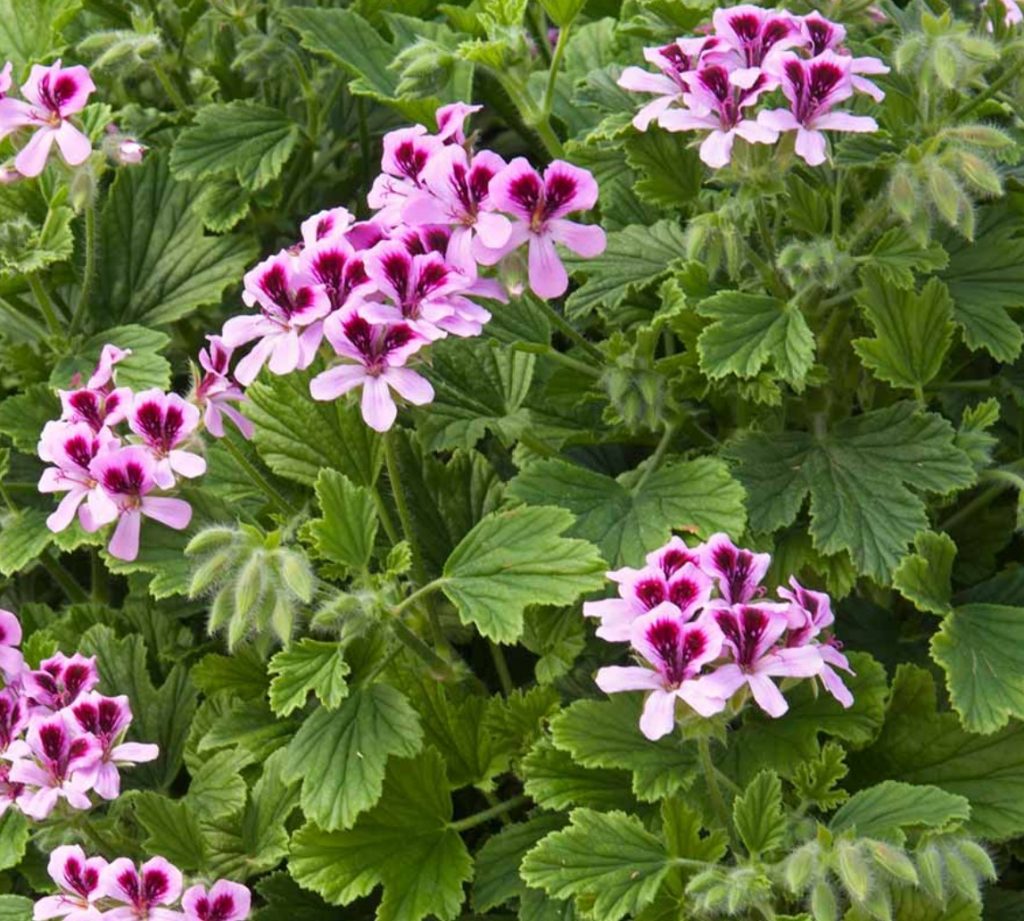
- Foliage: Scented geraniums (Pelargonium graveolens) typically have rounded or slightly lobed leaves with a soft, velvety texture. The leaves often display vibrant colors such as green, purple, or variegated patterns.
- Aroma: When touched or crushed, the leaves emit a distinctive fragrance reminiscent of rose, lemon, mint, or other pleasant scents.
Growth Habit
- Stems: The plant usually has woody or semi-woody stems that can become somewhat branched.
- Size: It generally grows as a low shrub or perennial, reaching heights of approximately 12 to 24 inches.
Flowers
- Appearance: While not always in bloom, scented geraniums produce small, five-petaled flowers that may be pink, red, or white.
- Blooming Season: Flowers typically appear during warmer months but are not the primary feature for identification.
Uses of Scented Geranium
Fragrance
- Scented geraniums (Pelargonium graveolens) are widely appreciated for their aromatic leaves, which emit pleasant fragrances such as rose, lemon, or mint.
Culinary Applications
- The leaves of certain scented geranium varieties are utilized in culinary practices.
- They can be incorporated into desserts, teas, and salads to impart distinctive flavours, enhancing the sensory experience of various dishes.
Natural Pest Repellent
- The strong scent of scented geraniums acts as a natural deterrent for pests such as mosquitoes, flies, and ants. Planting them around outdoor spaces can help maintain a pest-free environment without the use of chemical repellents.
Decorative Purposes
With their vibrant foliage and fragrant leaves, scented geraniums serve as attractive ornamental plants. They are commonly used in garden beds, containers, and hanging baskets to add visual appeal and sensory interest.
Household Freshening
- Dried or fresh leaves of scented geraniums can be placed in drawers, closets, or potpourri bowls to naturally freshen indoor spaces with their pleasant aroma