Parsley (Petroselinum crispum)
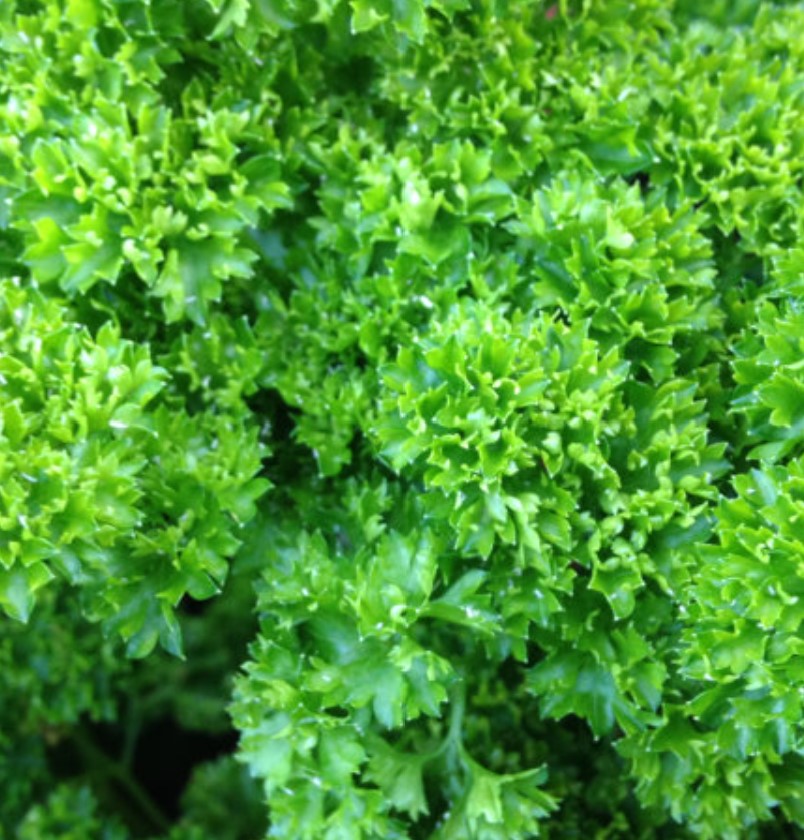
How to Identify Parsley
Parsley (Petroselinum crispum) is a widely used herb known for its fresh, mild flavour and vibrant green appearance. Proper identification ensures the correct use in culinary and medicinal applications.
Visual Characteristics
- Leaves: Parsley has bright green, flat or curly leaves depending on the variety. Flat-leaf parsley (also called Italian parsley) features broad, serrated leaves with a slightly glossy surface. Curly parsley has tightly curled, ruffled leaves.
- Stems: The stems are sturdy, green, and often slightly ribbed. They are typically smooth and can be easily broken when fresh.
- Size: Mature plants usually reach about 20-30 centimeters in height, with leaves spreading outwards.
Botanical Features
- Aroma: Parsley emits a fresh, slightly peppery scent with hints of earthiness when the leaves are crushed.
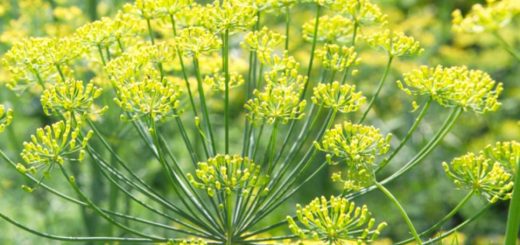
- Flowers: When flowering, parsley produces small, yellow-green flowers arranged in umbels, usually appearing in late spring or early summer.
- Seeds: The seeds are small, oval-shaped, and brownish-gray, used for propagation.
Growing Conditions
- Parsley prefers well-drained soil rich in organic matter.
- It thrives in full sun but can tolerate partial shade.
- Regular watering helps maintain lush foliage.
Uses of Parsley
Parsley (Petroselinum crispum) is a versatile herb that finds application across culinary, medicinal, and decorative domains. Its fresh flavor and vibrant appearance make it a popular choice in various contexts.
Culinary Uses
- Garnishing: Parsley is frequently used as a garnish to enhance the visual appeal of dishes such as soups, salads, and main courses.
- Flavoring: The herb adds a mild, fresh flavor to a wide range of recipes including sauces, dressings, and marinades.
- Ingredient in Dishes: Chopped parsley is incorporated into dishes like tabbouleh, chimichurri, and pasta for added freshness and aroma.
- Herb Butter and Pesto: Parsley serves as a key component in herb butters and pestos, imparting a bright flavor.
Decorative Uses
- Table Arrangements: Its lush green foliage makes parsley suitable for decorative purposes in table settings or floral arrangements.
- Herb Gardens: Cultivating parsley adds aesthetic value to herb gardens while providing fresh herbs for culinary use.
Other Uses
- Infusions and Teas: Parsley can be used in herbal infusions aimed at detoxification or hydration.
- Natural Dye: The leaves can be utilized to produce natural green dyes for textiles or crafts.