Marigold (Calendula, Tagetes)
How to Identify a Marigold
Marigolds are vibrant, hardy flowers commonly cultivated for their bright colors and pest-repellent properties. To accurately identify a marigold, consider the following characteristics:
Flower Appearance
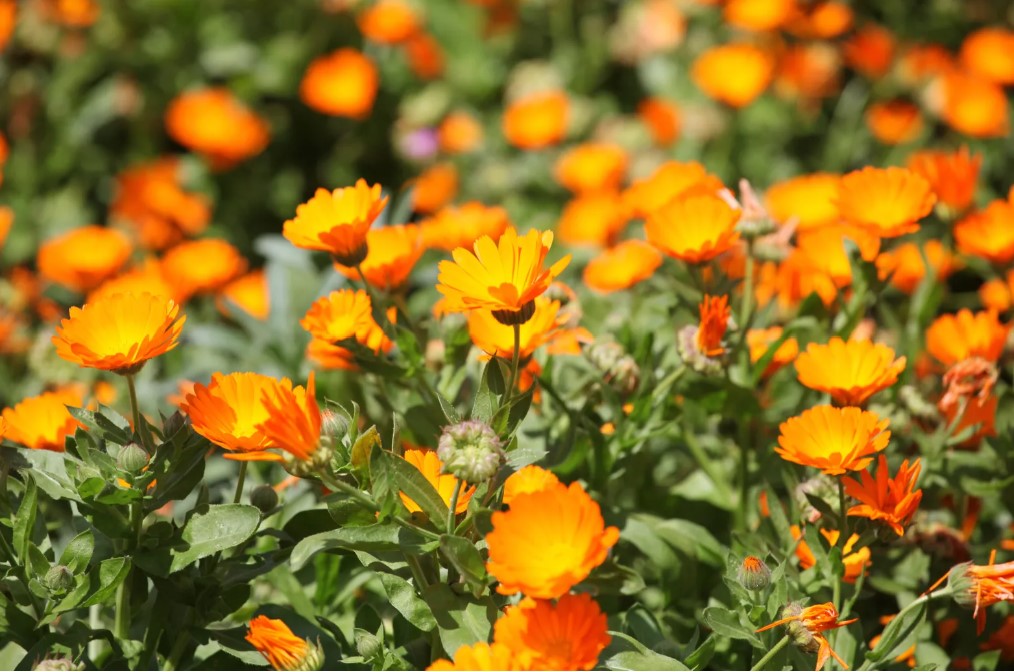
- Color: Typically bright orange, yellow, or golden hues. Some varieties may display reddish or maroon shades.
- Shape: The flowers are usually round with densely packed petals that form a ruffled or pom-pom-like appearance.
- Size: Flower diameter ranges from 1 to 3 inches, depending on the variety.
Foliage
- Leaves: The leaves are pinnately divided with serrated edges, giving them a feathery appearance.
- Color: Usually deep green, providing a striking contrast to the vibrant blooms.
Plant Structure
- Height: Marigolds can vary from low-growing ground covers (about 6 inches) to taller varieties reaching up to 3 feet.
- Growth Habit: They tend to have bushy, upright stems that support multiple blooms.
Scent
- Marigolds emit a distinctive pungent aroma, which is often described as somewhat spicy or musky, especially when the leaves are crushed.
Season and Habitat
- Blooming Season: Typically bloom from late spring through fall.
- Growing Conditions: Prefer full sun and well-drained soil; they are resilient and thrive in various climates.
Additional Tips
- Examine multiple flowers and leaves for consistency in color and shape.
- Compare with images of common marigold varieties such as African marigolds (Tagetes erecta) or French marigolds (Tagetes patula).
Uses of Marigold
Ornamental Purposes
Marigolds are widely cultivated for their vibrant and attractive flowers, making them popular choices for garden borders, flower beds, and decorative containers. Their bright colors add aesthetic appeal to outdoor and indoor spaces.
Pest Control
- Marigolds possess natural pest-repellent properties.
- When planted alongside vegetables and other crops, they can deter pests such as nematodes, aphids, and mosquitoes, thereby reducing the need for chemical pesticides.
Medicinal Applications
- Traditional medicine has utilized marigold extracts for their anti-inflammatory, antiseptic, and healing properties.
- Infusions or ointments derived from marigold flowers are often used to treat minor wounds, skin irritations, and inflammation.
Culinary Uses
- Certain varieties of marigold, especially Calendula officinalis, are edible and used in culinary preparations.
- The petals can be added to salads or used as a garnish due to their mild flavour and vibrant colour.
Cosmetic Products
- Marigold extracts are incorporated into skincare products such as creams, lotions, and ointments.
- Their soothing and healing qualities make them suitable for treating skin conditions like eczema and dermatitis.
Note: Always ensure proper identification before consumption or medicinal use to avoid potential confusion with similar-looking plants.