Chicory (Cichorium intybus)
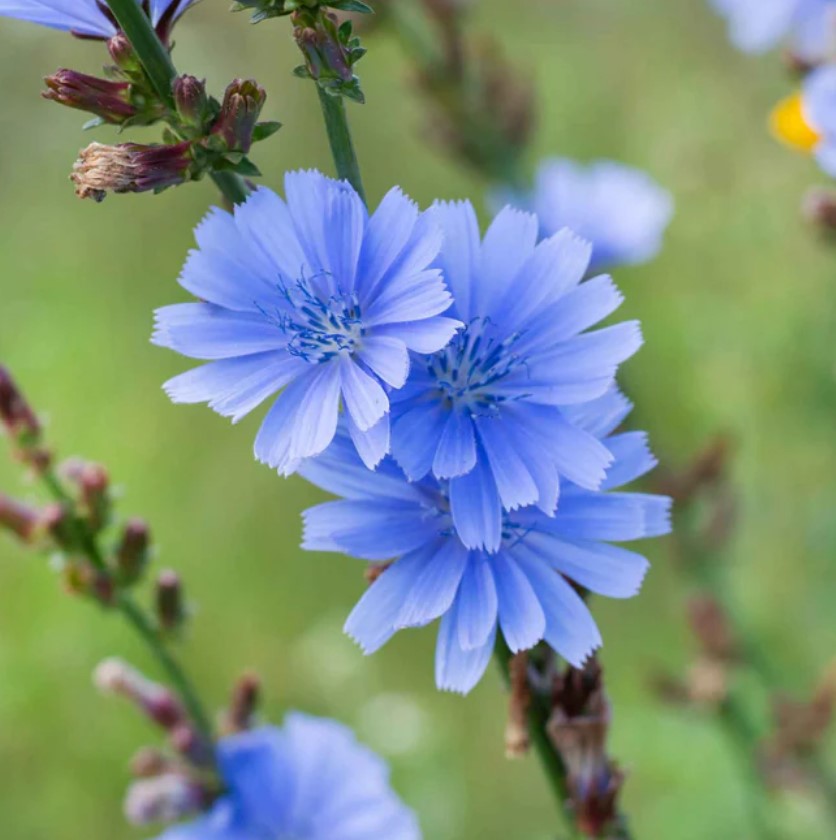
How to Identify the Chicory Plant
The chicory plant (Cichorium intybus) is a perennial herbaceous species known for its distinctive features. To accurately identify this plant, consider the following characteristics:
Leaves
- Shape and Texture: The leaves are typically lance-shaped with a slightly serrated or toothed margin.
- Arrangement: Basal leaves form a rosette close to the ground, while upper leaves are more elongated and may be clasping the stem.
- Color: They are usually a vibrant green, sometimes with a bluish tint.
Stems
- Appearance: The stems are sturdy, upright, and can reach heights of up to 1.5 meters.
- Surface: They are generally smooth but may have slight ridges or fine hairs.
Flowers
- Color and Shape: The flowers are striking, with a bright blue hue, although white or pink varieties also exist.
- Structure: Each flower is daisy-like, with multiple petals radiating from a central disk.
- Blooming Period: Typically bloom from late spring through early fall.
Seeds and Seed Heads
- Shape: The seed heads resemble small dandelions, with fluffy tufts that aid in wind dispersal.
- Timing: Seeds mature in late summer to early autumn.
Habitat
- Chicory often grows along roadsides, fields, and waste areas. It prefers well-drained soils and full sunlight.
Uses of Chicory Plant
Culinary Applications
- Chicory leaves and roots are widely utilized in culinary practices.
- The tender young leaves are often used fresh in salads, providing a slightly bitter flavour that complements other greens.
- Additionally, the roasted roots serve as a natural coffee substitute or additive, imparting a rich, earthy aroma and taste.
Medicinal Benefits
- Traditionally, chicory has been employed for its potential health benefits. It is believed to support digestion, act as a mild diuretic, and promote liver health.
Ornamental Use
- With its striking blue flowers, chicory also serves ornamental purposes in gardens and landscape designs, adding aesthetic appeal during its blooming period from late spring through early fall.