Bergamot/Bee Balm (Monarda)
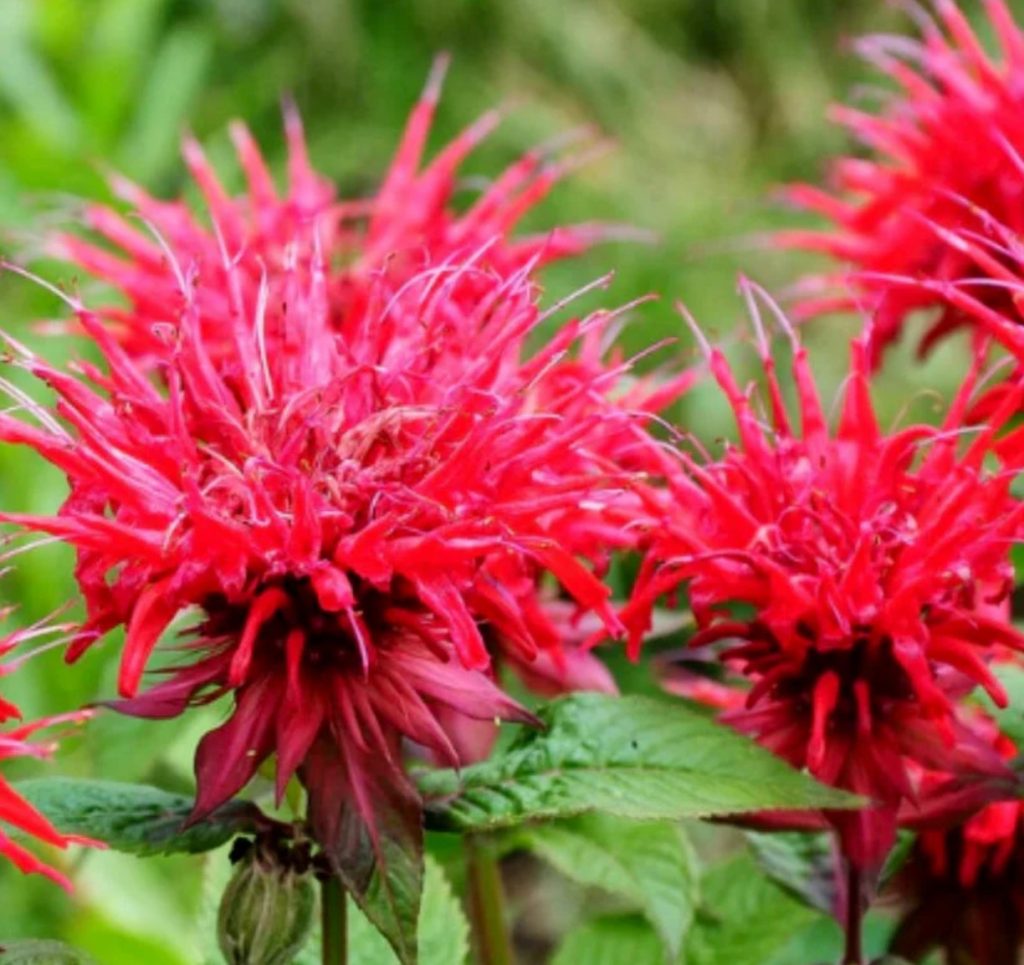
How to Identify the Bergamot/Bee Balm Plant
Bee Balm (Monarda), is a perennial herbaceous plant renowned for its vibrant flowers and aromatic leaves. To accurately identify this plant, consider the following characteristics:
Leaves
- Shape and Texture: The leaves are typically ovate to lance-shaped with serrated margins.
- Arrangement: They grow in opposite pairs along square stems, a common trait among members of the mint family.
- Aroma: When crushed, the leaves emit a distinctive aromatic scent reminiscent of oregano or thyme.
Stems
- Shape: The stems are square in cross-section, a hallmark of the mint family.
- Height: Depending on the variety, stems can reach heights ranging from 2 to 4 feet (60 to 120 centimeters).
Flowers
- Appearance: Bee Balm produces clusters of tubular or trumpet-shaped flowers.
- Colors: Common hues include red, pink, purple, and white.
- Blooming Period: Typically blooms from late spring to mid-summer.
- Arrangement: Flowers are arranged in dense whorls at the top of the stems.
Growing Conditions
- Prefers full sun exposure and well-drained soil.
- Attracts pollinators such as bees, butterflies, and hummingbirds.
Uses of the Bergamot/Bee Balm Plant
Culinary Uses
- The aromatic leaves of the Bergamot/Bee Balm plant can be utilized in culinary preparations.
- They impart a minty, slightly spicy flavour that enhances salads, herbal teas, and desserts. Fresh or dried leaves may be added to dishes to provide a distinctive herbal note.
Ornamental Value
- Beyond its practical applications, the plant is widely cultivated for ornamental purposes.
- Its vibrant flowers attract pollinators such as bees and butterflies, making it an excellent addition to gardens aiming to support local ecosystems.
Pollinator Support
- Planting Bergamot/Bee Balm contributes significantly to supporting pollinator populations by providing a rich nectar source during blooming periods.