Anise (Pimpinella anisum)
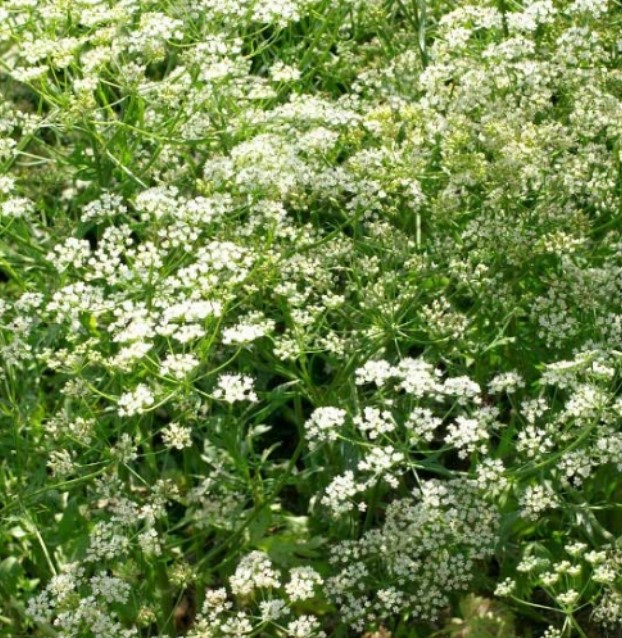
How to Identify Anise
The anise plant (Pimpinella anisum) is a perennial herb distinguished by several characteristic features that facilitate its identification.
Visual Characteristics
- Leaves: The foliage of the anise plant consists of finely divided, feathery leaves that are aromatic when crushed. The leaves are bright green and have a delicate, lacy appearance.
- Stems: The stems are slender, upright, and typically reach heights of 60 to 80 centimeters. They are smooth and may have a slightly ridged texture.
- Flowers: Anise produces small, white to pale yellow flowers arranged in umbels—umbrella-shaped clusters—that bloom during the summer months.
- Seeds: The mature seeds are oval-shaped, ridged, and light brown with a distinctive sweet aroma reminiscent of licorice.
Growing Conditions
- Habitat: Anise thrives in well-drained soils with full sun exposure. It is often cultivated in herb gardens or on farms for culinary and medicinal purposes.
- Seasonality: Flowering occurs in mid to late summer, with seed production following shortly thereafter.
Fragrance
A key identifying feature is the plant’s aromatic quality. When the leaves or seeds are crushed, they emit a sweet, liquorice-like scent that is unmistakable.
Uses of Anise Plant
The anise plant (Pimpinella anisum) has been valued for centuries due to its versatile applications in various fields. Its aromatic seeds and leaves are utilized in the following ways:
Culinary Uses
- Flavouring Agent: The seeds are widely used to impart a sweet, liquorice-like flavour to baked goods, confectioneries, and beverages such as liqueurs and teas.
- Spice in Cooking: Fresh or dried leaves and seeds are added to soups, stews, and salads to enhance flavor profiles.