Evening Primrose (Oenothera biennis)
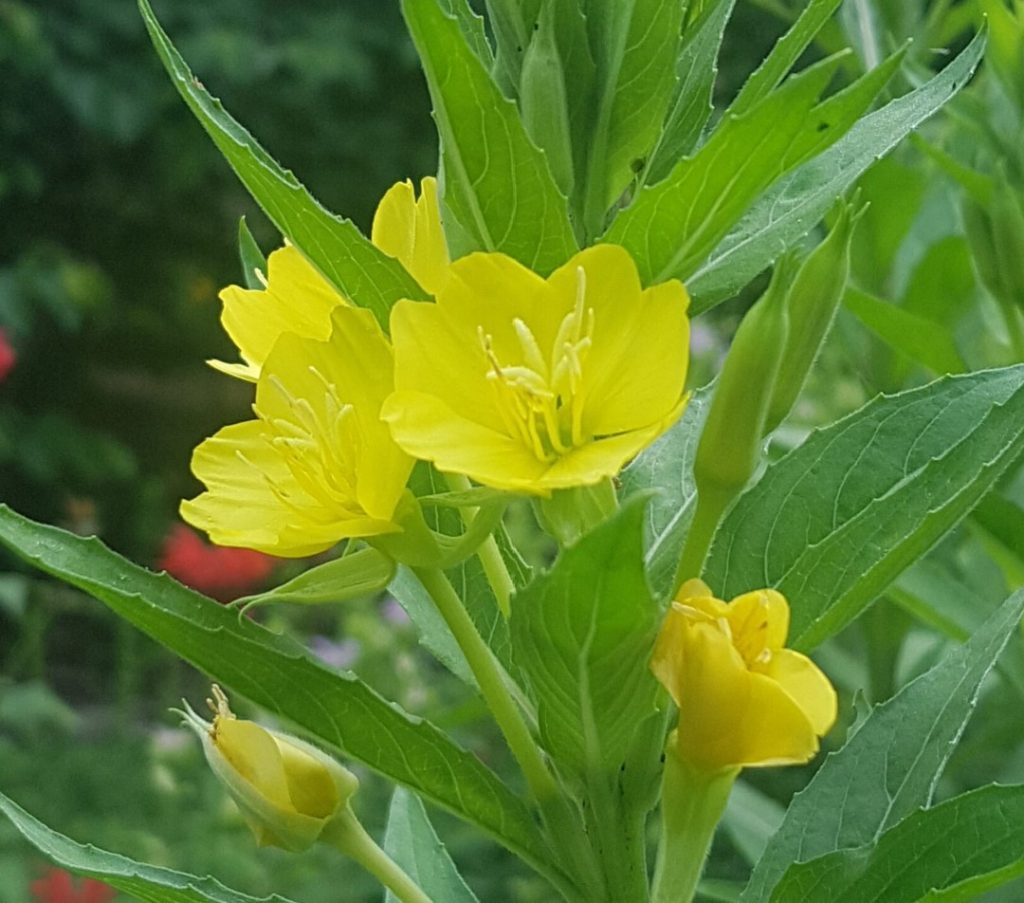
How to Identify Evening Primrose
Evening primrose (Oenothera biennis) is a perennial plant known for its distinctive features and medicinal properties. Proper identification involves observing several key characteristics:
Leaves
- The leaves are lance-shaped, elongated, and typically grow in a rosette pattern at the base of the plant.
- Upper leaves are narrower and may be slightly toothed or smooth along the edges.
- The foliage has a slightly hairy or fuzzy texture.
Stems
- The stems are tall, slender, and can reach heights of 3 to 5 feet.
- They are usually erect with a somewhat rough surface due to fine hairs.
Flowers
- The flowers bloom in late spring to summer, often from June to August.
- Each flower is large, with four pale yellow petals that are slightly rounded and delicate.
- Flowers open in the evening or late afternoon, which is characteristic of evening primrose.
- The blooms last only one day, closing by midday.
Seed Pods
- After flowering, seed pods develop that are elongated and contain numerous tiny seeds.
- When mature, the pods may split open to disperse seeds.
Habitat
- Typically found in open fields, roadsides, and disturbed areas.
- Prefers well-drained soil and full sunlight.
Uses of Evening Primrose
Culinary
- All parts of the common evening primrose are edible, including the roots, leaves, flowers, buds, and seeds.
- It is a popular wild edible, with roots often described as a peppery, root-vegetable substitute (best in the first year) and leaves usable as a spinach alternative
Ecological Role
- Pollinator Support: The flowers attract pollinators like bees and butterflies, contributing to local biodiversity.