Myrtle (Myrtus communis)
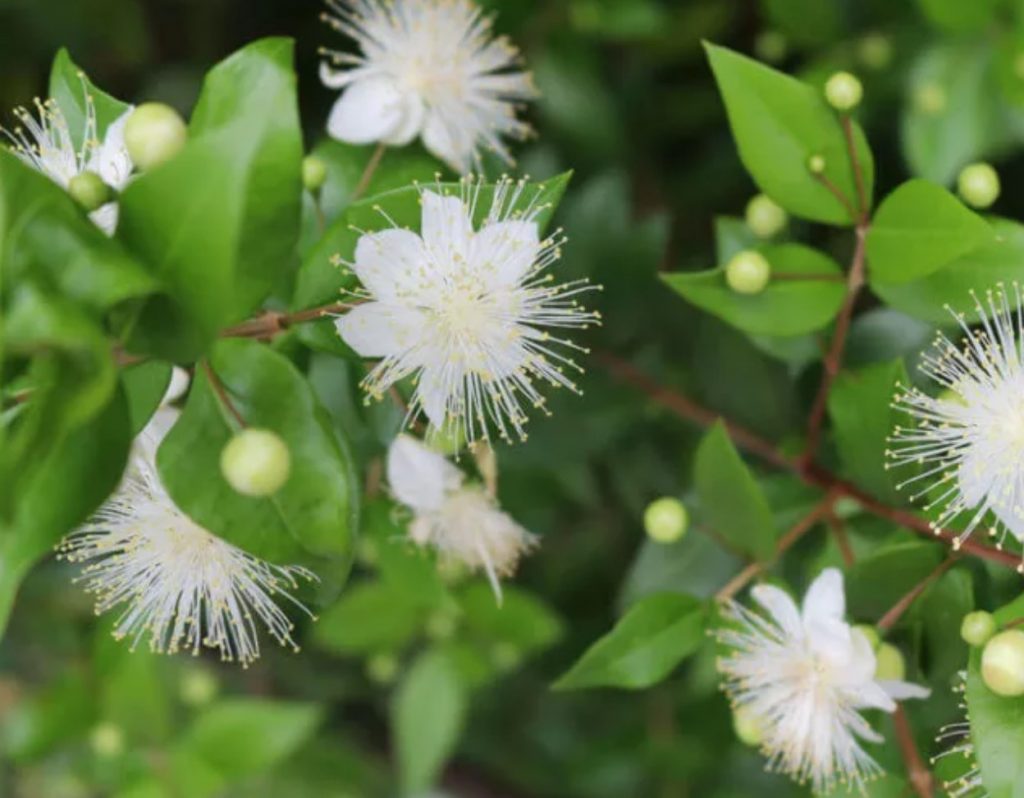
How to Identify Myrtle
Myrtle (Myrtus communis), a versatile evergreen shrub or small tree, can be distinguished through several characteristic features. Proper identification involves examining its physical attributes, growth habits, and distinctive botanical traits.
Physical Characteristics
- Leaves: Myrtle leaves are typically oval-shaped, with a glossy, dark green surface on the upper side and a paler, sometimes slightly fuzzy underside. The leaves are aromatic when crushed, emitting a fragrant scent.
- Flowers: During the blooming season, Myrtle produces small, star-shaped flowers that are usually white or pale pink. These flowers often have a sweet fragrance and grow in clusters.
- Berries: Following flowering, Myrtle bears small, round berries that transition from green to blue-black or dark purple as they ripen.
Growth Habit
- Myrtle generally maintains a dense, bushy form with multiple stems originating from the base.
- It can reach heights ranging from 1 to 5 meters depending on the variety and growing conditions.
Botanical Features
- Bark: The bark of Myrtle is smooth and grayish-brown in young plants but may become more textured with age.
- Aromatic Qualities: The leaves and berries emit a distinctive aroma characteristic of the Myrtaceae family.
Uses of Myrtle
Culinary Applications
- Myrtle berries and leaves are often used as flavouring agents in various culinary dishes.
- The aromatic leaves can be incorporated into stews, marinades, and sauces, imparting a distinctive fragrance and taste.
- Additionally, the berries are sometimes used to produce flavoured liqueurs or infusions.
Ornamental Use
- Due to its dense foliage and attractive appearance, Myrtle is widely cultivated as an ornamental shrub or small tree in gardens and landscapes. Its evergreen nature ensures year-round visual appeal, while its fragrant flowers add aesthetic value.
Environmental Benefits
- Myrtle contributes to ecological stability by providing habitat and food for various pollinators such as bees and butterflies. Its ability to thrive in diverse environments also makes it valuable for soil stabilization and landscape restoration projects.