Sweet Woodruff (Galium odoratum)
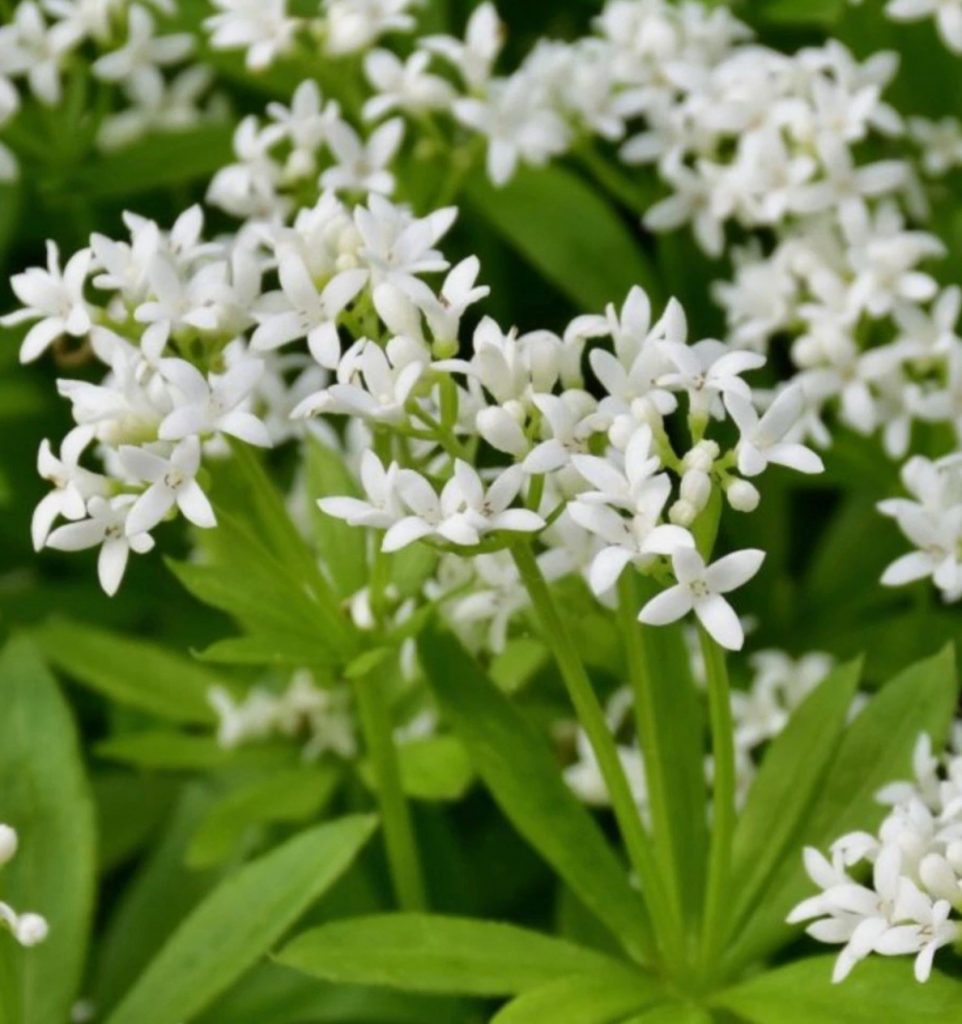
How to Identify Sweet Woodruff
Woodruff, a perennial herbaceous plant, is distinguished by several characteristic features that facilitate its identification in natural settings or cultivated environments.
Leaf Structure
- The plant exhibits whorled leaves, typically arranged in a circular pattern around the stem.
- Each whorl comprises three to six narrow, lance-shaped leaves with smooth margins.
- The leaves are usually a vibrant green and possess a glossy surface.
Flower Characteristics
- Woodruff produces small, white, star-shaped flowers that grow in dense clusters at the top of slender stems.
- The flowers have five petals and are often fragrant, emitting a sweet scent that attracts pollinators.
Stem Features
- The stems are slender, erect, and can reach heights of approximately 15 to 30 centimeters. They are generally smooth and unbranched, supporting the flower clusters.
Fragrance
- A distinctive sweet aroma emanates from the leaves and flowers when crushed or brushed against. This scent is often used as an identifying feature.
Growing Environment
- Woodruff prefers shaded or semi-shaded areas with moist, well-drained soil. It commonly grows in woodland clearings, hedgerows, and shaded gardens.
Additional Tips
- Confirm the presence of whorled leaf arrangement.
- Observe the small white star-shaped flowers during blooming season, typically in spring to early summer.
- Smell the plant for its characteristic fragrance to aid identification.
Uses of Sweet Woodruff
Culinary Applications
- Flavoring Agent: The aromatic leaves and flowers of woodruff are often used to impart a sweet, hay-like flavor to desserts, jellies, and beverages.
- Herbal Tea: Dried woodruff can be brewed into a fragrant herbal tea enjoyed for its subtle taste and soothing properties.
Ornamental and Landscaping
- Garden Planting: Due to its attractive foliage and fragrant flowers, woodruff is cultivated as ground cover in shaded gardens and woodland landscapes.
- Wildlife Habitat: Its dense growth provides shelter for small insects and pollinators such as bees.
Fragrance and Scent Production
- Natural Perfumes: The distinctive scent of woodruff makes it a desirable ingredient in natural perfumes and scented products.
- Sachets and Potpourri: Dried leaves and flowers are used in sachets or potpourri to add a pleasant aroma to storage areas.
Cultural and Traditional Uses
- Festive Decorations: In some regions, woodruff is incorporated into traditional decorations during seasonal festivals due to its fragrant qualities.
- Symbolic Significance: Its presence often symbolizes purity and renewal in various cultural practices.
Environmental Benefits
- Soil Improvement: As a perennial herb, woodruff helps stabilize soil in shaded areas, preventing erosion.
- Pollinator Support: Its flowers attract pollinating insects, contributing to local biodiversity.