Borage (Borago officinalis)
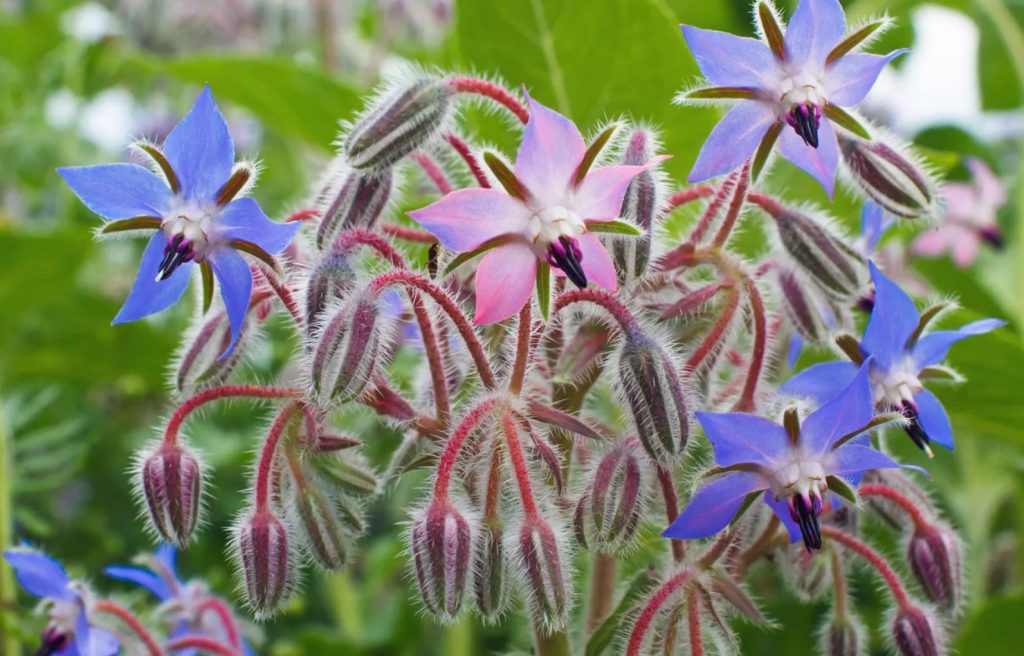
How to Identify Borage
Borage (Borago officinalis) is a vibrant, herbaceous plant.. Its distinctive features make it relatively easy to identify in various environments, including gardens, fields, and roadside verges.
Physical Characteristics
- Leaves: Borage has oval, slightly hairy leaves with a rough texture. The leaves are typically a dull green color and grow alternately along the stem.
- Stems: The plant produces upright, branched stems that are also hairy and can reach heights of up to 60 centimeters (about 2 feet).
- Flowers: One of the most striking features is its star-shaped flowers, which are bright blue with five pointed petals. The flowers often have fine hairs on their surface and may appear from late spring to early autumn.
- Flowers Arrangement: The flowers grow in clusters at the top of the stems, creating a striking display.
Growing Conditions
- Borage prefers well-drained soil and thrives in full sun but can tolerate partial shade.
- It is often cultivated as an ornamental or medicinal herb but can also grow wild.
Additional Identification Tips
- Aroma: When crushed, the leaves emit a mild cucumber-like scent.
- Seed Pods: After flowering, Borage produces small, spiny seed pods that contain numerous tiny seeds.
Uses of Borage
Culinary Applications
- Borage leaves and flowers are often used in culinary preparations.
- The young leaves can be added to salads, providing a mild cucumber flavor that enhances the freshness of dishes.
- The vibrant blue flowers are edible and frequently used as garnishes for desserts, drinks, and salads, adding visual appeal and subtle flavor.
Medicinal Benefits
- Historically, borage has been valued for its medicinal properties.
- It is believed to possess anti-inflammatory and soothing effects, particularly in alleviating respiratory issues such as coughs and colds.
- The plant’s oil, rich in gamma-linolenic acid (GLA), is sometimes used in supplements to support skin health and hormonal balance.
Ornamental Use
- Due to its striking blue flowers and lush foliage, borage is commonly cultivated as an ornamental plant in gardens.
- Its vibrant appearance attracts pollinators such as bees and butterflies, contributing to the ecological health of garden environments.
Cosmetic Applications
- Extracts from borage are incorporated into some cosmetic products for their purported skin-soothing properties.
- The oil derived from borage seeds is used in skincare formulations aimed at reducing inflammation and moisturizing the skin.
Wildlife Support
- The nectar-rich flowers provide a valuable food source for pollinators, supporting local biodiversity.
- Borage plants are especially attractive to bees, which play a crucial role in pollination processes across various ecosystems.
Note: Always ensure proper identification before consumption or medicinal use to avoid potential confusion with similar-looking plants.