Horseradish (Armoracia rusticana)
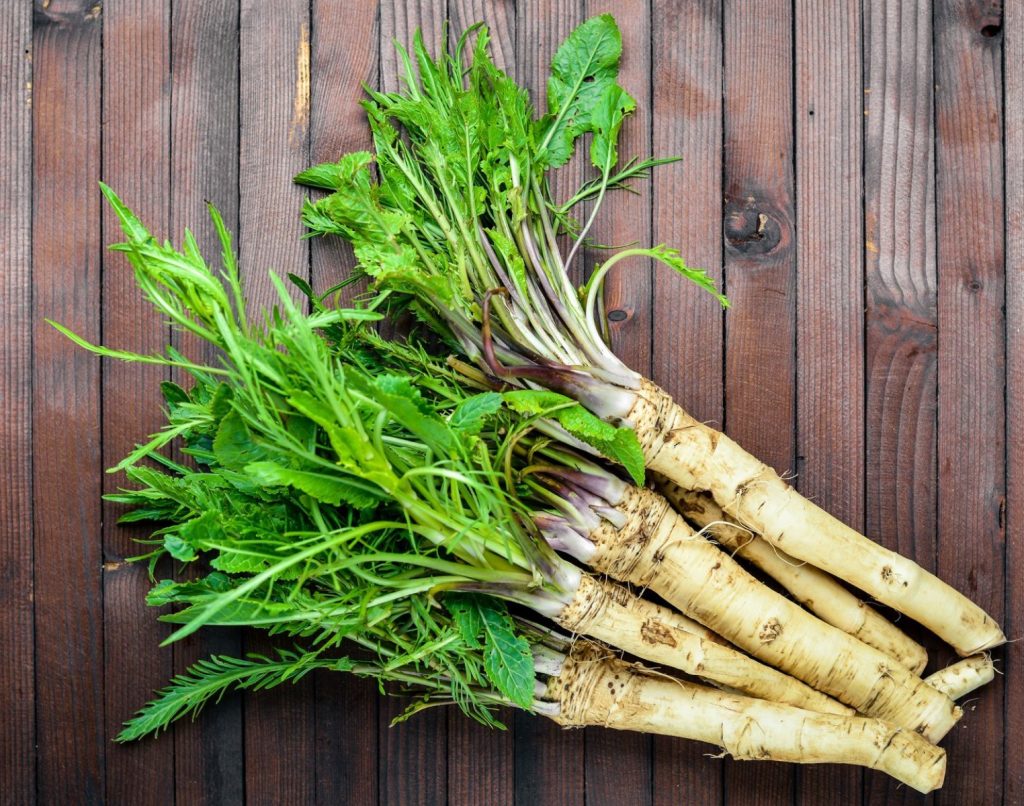
How to Identify Horseradish
Horseradish (Armoracia rusticana) is a perennial plant known for its pungent root, which is commonly used as a condiment.
Plant Appearance
- Height: Typically grows between 2 to 3 feet tall.
- Stems: Upright, sturdy, and hairy with a rough texture.
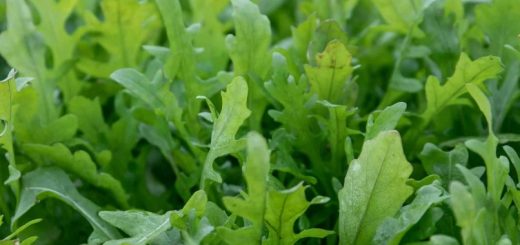
- Leaves: Large, broad, and lance-shaped with serrated edges. The leaves are dark green and may have a slightly wrinkled surface.
Root Characteristics
- The most distinctive feature is its thick, tapered root resembling a large, knobby carrot or horseradish root.
- The root has a pale cream or white color inside and emits a strong, pungent aroma when cut or grated.
Flowers
- Produces clusters of small, white flowers with four petals arranged in a cross shape.
- Flowers typically bloom in late spring to early summer.
Growth Habitat
- Prefers moist, well-drained soils in temperate regions.
- Often found along garden borders, wild areas, or cultivated fields.
- Can be grown as a garden plant.
Odor and Taste
- When the root is grated or crushed, it releases a sharp, spicy aroma characteristic of horseradish.
- The taste is hot and pungent but can vary depending on freshness and preparation.
Additional Tips
- Be cautious when handling the root; the pungent compounds can cause irritation to the skin and eyes.
- Confirm identification by comparing the plant’s overall structure and aroma with reputable botanical references before consumption.
Uses of Horseradish
Culinary Applications
- Condiment: The grated root is commonly used as a spicy condiment to enhance the flavor of meats, sandwiches, and seafood dishes.
- Sauces: It is a key ingredient in horseradish sauce, often served with roast beef, prime rib, or smoked fish.
- Pickling: Horseradish can be added to pickles and relishes to impart a pungent, spicy note.
- Flavor Enhancer: Small amounts are used to add depth and heat to soups, stews, and dressings.
Medicinal and Health Benefits
- Digestive Aid: Traditionally believed to stimulate digestion and improve appetite.
- Respiratory Relief: Its pungent compounds may help alleviate congestion and respiratory issues.
- Antimicrobial Properties: Contains compounds that exhibit antimicrobial effects, potentially supporting immune health.
Household and Other Uses
- Natural Pest Repellent: The strong aroma can deter certain pests when planted in gardens.
- Preservation: Its antimicrobial properties have historically been used in food preservation methods.
Note: Always ensure proper identification before consumption or medicinal use to avoid potential confusion with similar-looking plants.